
The Ultimate Guide to Curly Gray Hair Care
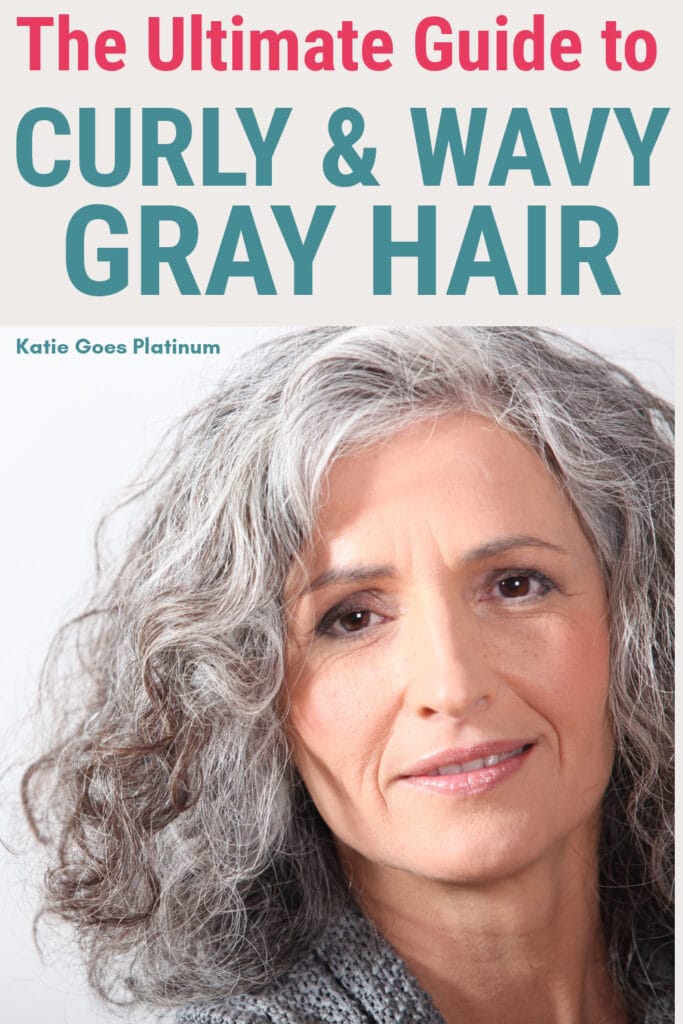
If you’ve ever felt overwhelmed trying to care for your curly or wavy gray hair, you are not alone.
Many of us were never taught how to care for curls or grey hair, so when you combine the transition to silver with the unique needs of curly hair, it can feel like learning to care for a whole new head of hair.
That’s exactly why Joli from QuickSilverHair and I decided to make the very first episode of our new podcast, The Silver Thread, an epic deep dive into curly silver hair care.
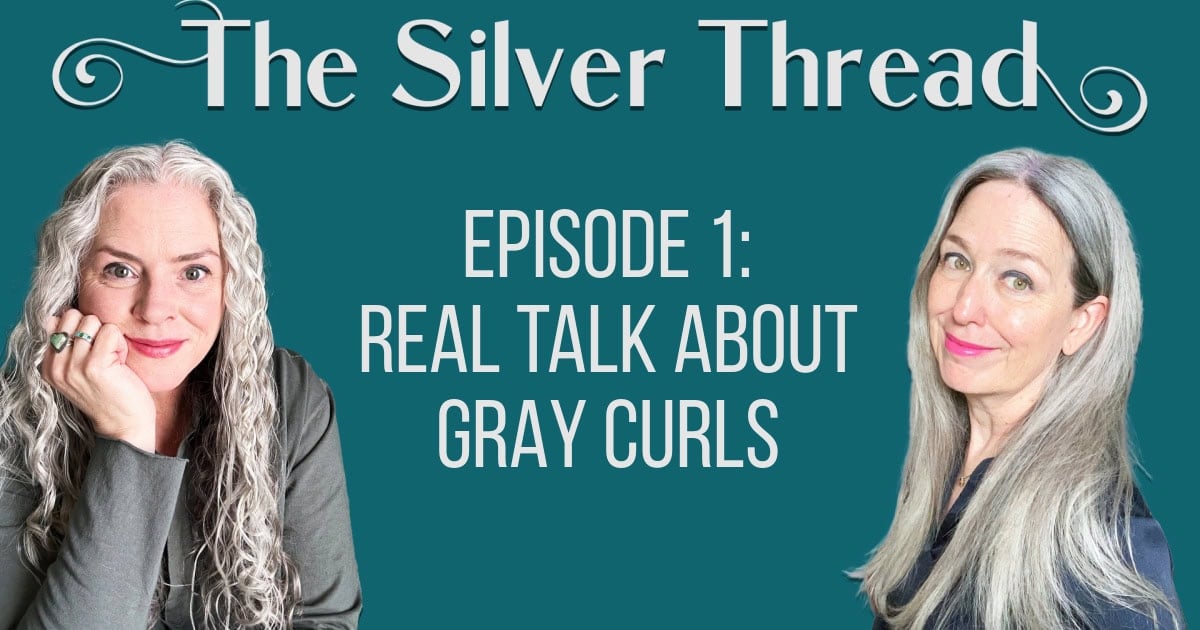
Over the years, we’ve fielded many questions from our community, and Joli — as both a curly hair expert and fellow silver sister — has the answers.
In this guide, I’ve taken the most valuable takeaways from our conversation and organized them into a comprehensive, easy-to-navigate resource.
Whether you’re just beginning your gray hair journey or you’ve been dye-free for years, this article will help you better understand your hair, choose the right products, and fall back in love with your curls.
Please note that this article may contain affiliate links. You can read my full disclosure at the bottom of the page.
Why Does My Hair Feel So Different Now That It’s Gray?
Some women find that their hair becomes drier, frizzier, or more unruly after going gray, especially those with curls or waves.
But as Joli explains, this change is often less about the color and more about what’s missing.
When you dye your hair, the pigment camouflages frizz and can change the curl pattern with the damage to the cuticle from the dye.
So when you ditch the dye, it may feel very different, the frizz may be more obvious, and the curl pattern may change to looser waves – or sometimes it can become curlier depending on how the porosity changes without dye.
Add in hormonal shifts around menopause, which can affect density and curl pattern, and you’ve got a perfect storm of change.
The result? Hair that feels completely unfamiliar — even to you.

The Truth About Frizz and Curly Gray Hair
Frizz is one of the most common complaints among curly silver sisters. And it’s not always easy to fix because “frizz” isn’t one single thing — it’s a symptom with multiple causes.
Here are a few common types of frizz Joli outlined:
- Dry frizz: Caused by a lack of proper conditioning and not protecting your curl pattern with the right gel or mousse.
- Environmental frizz: A reaction to humidity or dry air (yes, both can cause frizz).
- Product-related frizz: Ingredients like glycerin, silicones, or heavy waxes can cause buildup, dryness, and breakage, which results in frizz.
- Functional frizz: Some frizz is normal and part of curly hair’s texture. It’s not always something to “fix.”
Key Tips to Reduce Frizz:
- Use a sulfate-free shampoo to avoid stripping your hair.
- Avoid high levels of glycerin in your styling products, especially in very dry or very humid climates. Try to look for products where glycerin is not listed as one of the top 10 ingredients.
- Use a gel with hold to set your curl pattern and prevent frizz from creeping in.
- Deep condition regularly, especially if you live in a dry climate or your curls feel rough to the touch.
- Make sure your conditioner and leave-in are appropriate for your hair type — not all curly products work for all curl patterns.
Tip: Check out Joli’s Ultimate Guide to Hair Types to determine your porosity, density, and curl pattern — all of which matter more than just 2A/3B/etc. labels.
Is Gray Hair Frizzier Than Dyed Hair?
There’s a common misconception that gray hair is frizzier than dyed hair. But Joli points out that frizz is simply more noticeable on gray hair because there’s no pigment for frizz to hide behind.
Frizz also stands out more if you have looser curl patterns, Joli says, “because it’s lifted away from the wave. Whereas with a tighter curl pattern, it kind of blends in and you just get volume.”
How to Condition Without Weighing Down Your Curls
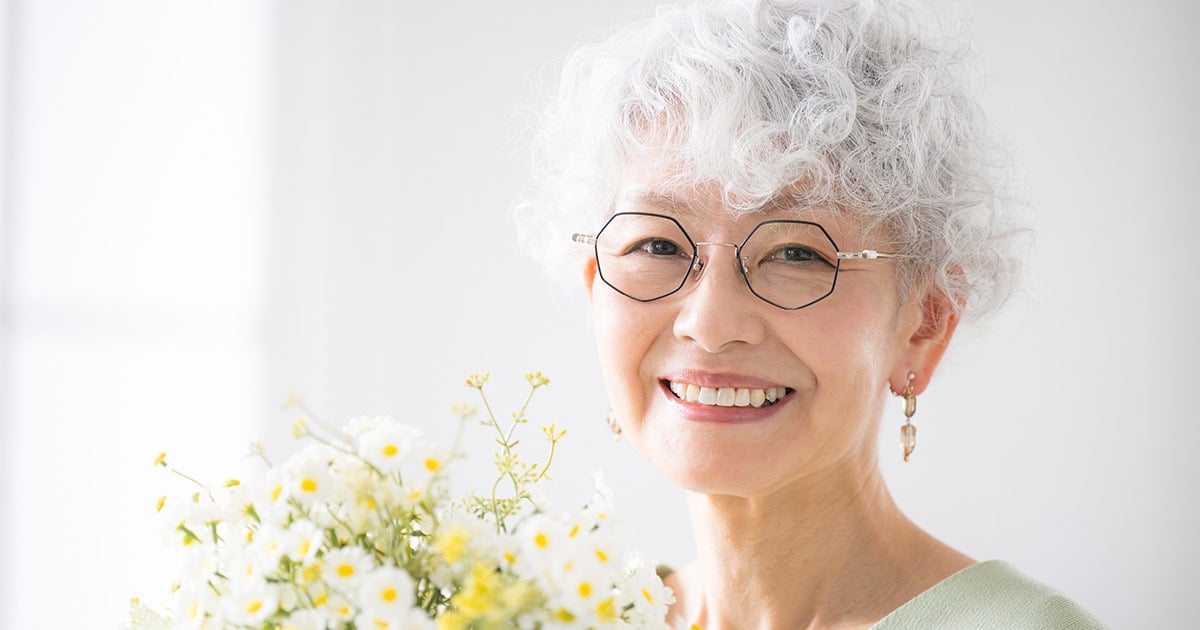
This is a delicate balance, especially for those with fine or loose curls.
If your products are too rich (think heavy butters or waxes), your curls may lose shape and look limp. If your products are too light, you’ll end up with dryness and frizz.
Here’s what Joli recommends:
- Choose conditioners and leave-ins that are formulated for your specific hair type and porosity.
- Apply conditioner from the ends upward, not at the roots.
- Avoid layering too many products — stick to a simple routine.
- Use a gel or mousse to hold your curl pattern, then scrunch out the crunch with oil or a lightweight serum. * Scroll down for a video demonstration of how to scrunch out the crunch ⬇️
Why Purple Shampoo Isn’t Always Curly Hair Friendly

Purple shampoo is a go-to for many silver sisters, but it’s often too drying for curly or wavy hair.
That’s because most purple shampoos contain sulfates or harsh surfactants to help the pigments bind to the hair, and these ingredients combined can cause dryness, especially when used too frequently.
Better Alternatives:
- Use a purple conditioner instead of shampoo. These are generally more hydrating and less aggressive.
- Try adding purple toning drops (like the ones from Silvering) to your favorite conditioner, so you get toning benefits without switching formulas.
- Prevent discoloration in the first place with a simple routine:
- Use UV protection before any sun exposure
- Filter your shower water
- Clarify regularly to avoid product buildup
- Use UV protection before any sun exposure
Bonus: Joli’s QuickSilverHair Clay can remove stains from temporary color or product buildup — it’s gentle and curl-friendly.
Help! My Curl Pattern Is Inconsistent
Want to Save this Article?
Nearly everyone has multiple curl patterns on their head, no matter what color their hair is. You’re not alone if the top layer is straight or curly while the underneath is the opposite, or if your curls form tighter spirals on one side versus the other.
Solutions:
- Embrace the variety. This is a natural part of curly (and silvering) hair.
- Avoid comparing your curls to influencers online — they’re often showing you their best wash day hair, not their everyday hair.
- Ask your stylist for a customized curly cut that accounts for your unique texture and varying curl patterns.
- Use a gel to help unify your pattern — and scrunch or twist smaller sections to encourage curl where needed.
How to Use Gel Without the Crunch

Let’s be honest: gel can be intimidating.
If you’ve ever been left with stiff, crunchy hair, you’re not alone — I used to hate it too! But Joli explained something that completely changed how I think about gel.
Gel is a curl-defining, frizz-preventing, protective shield that makes your curls last longer. The “crunch” is just a temporary cast that forms to lock in and set the curl’s shape while it dries.
The solution?
Once your hair is completely dry, gently scrunch out the crunch with a few drops of oil or serum (Joli likes squalane oil or Loma’s Nourishing Oil).
This breaks the cast and reveals soft, touchable curls — with all the definition and none of the stiffness.
Demonstration: How to Scrunch Out the Crunch

What If I Want to Straighten My Hair Sometimes?
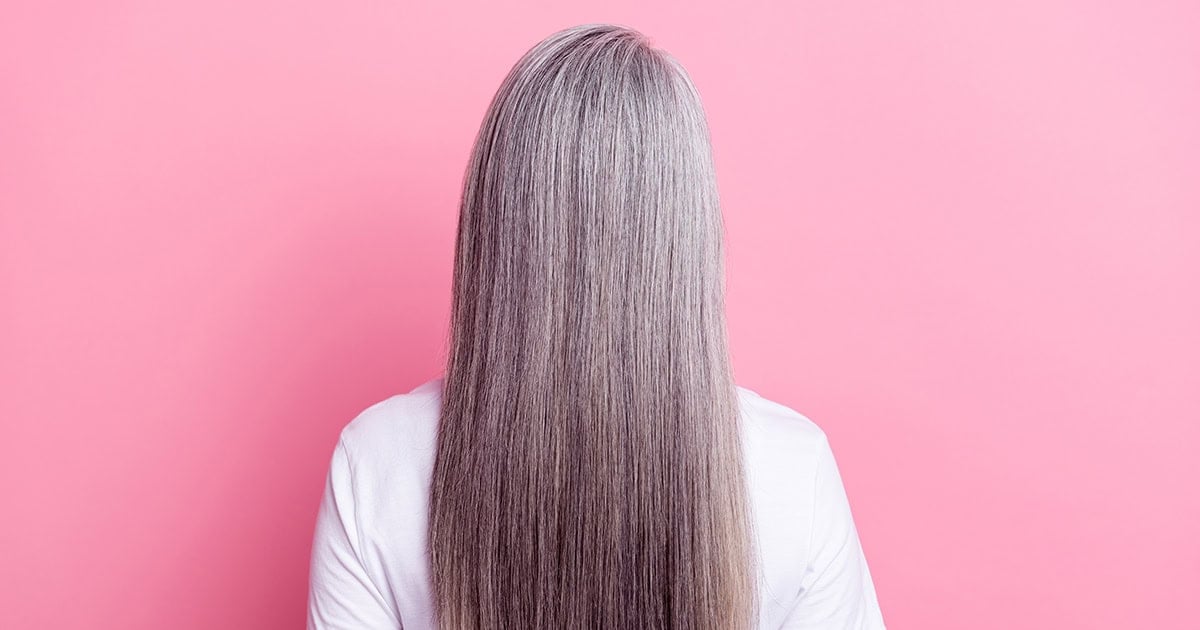
No problem!
Whether you’re blowing out your curls or trying a heatless styling method, the key is to protect your silver strands while minimizing damage and discoloration.
If using heat tools:
- Use a heat protectant rated for up to 450°F.
- Stick to low or medium heat.
- Always use UV protection combined with an SPF if you’ll be outdoors.
Heatless Curling Options I Love:
- Curling ribbons (great for long layers and loose curls)
- Octocurl (comes in multiple sizes and works well overnight). Just make sure to use light or white colored fabric versions to avoid dye transfer to your silver hair.
Yellowing Gray Curls: What You Need to Know
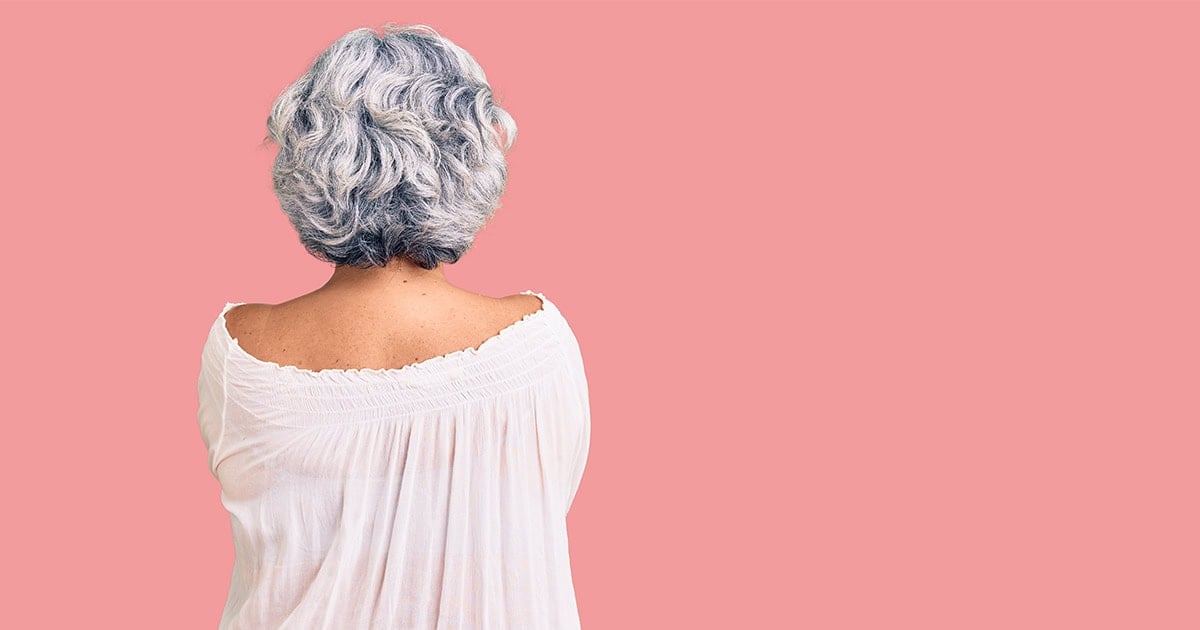
Many silver sisters worry about yellowing or dull hair — especially if they’re dealing with dryness or use a lot of products to manage curls.
Here’s what Joli recommends to keep your silver bright:
- Use a clarifying or chelating shampoo once or twice a month to remove minerals and buildup.
- Avoid overusing oils, waxes, or butters that can coat the hair and reduce shine.
- Protect your hair from UV exposure with hats or leave-in products containing UV filters.
- Use QuickSilverHair Clay or a gentle clarifier to restore brightness without damaging the curl.
- Watch out for dye transfer from fabrics and products. Try to use white or clear products on your gray hair to avoid staining.
- Use a water filtration system to avoid discoloration from minerals, product build-up, etc.
A Simpler Curly Hair Routine (That Actually Works)

You don’t need 10 steps or 8 products to have beautiful curls. In fact, Joli recommends a more streamlined approach:
Wash Day Routine:
- Sulfate-free shampoo
- Conditioner for your hair type
- Leave-in with UV protection
- Gel for hold and definition
- Diffuse or air-dry
- Scrunch out crunch with oil once fully dry
Between Wash Days:
- Refresh with water and a touch of leave-in or curl cream
- Use updos, buns, or clips to extend your style
- Reapply UV protection before sun exposure
For additional simple curly hair routines, check out Atoya Bass and Swavy Curly Courtney for inspiration.
Shine, Volume & Styling: Fine-Tuning Your Look

If your white or gray curls feel dull or lifeless, the issue may be your products — not your hair. Too much buildup can mask your natural shine, while the wrong weight of product can either decrease or increase your volume.
Hair type is the biggest factor to shine. Fine, silky, low porosity hair types are shinier than coarser or higher porosity hair types.
Joli’s advice:
- Skip heavy oils unless your hair is coarse, thick, or high porosity.
- Use light-reflective serums sparingly on dry hair.
- Trim regularly — especially if your ends are dry, yellowing, or breaking.
Is It Safe To Use Temporary Colors on Silver Curls?
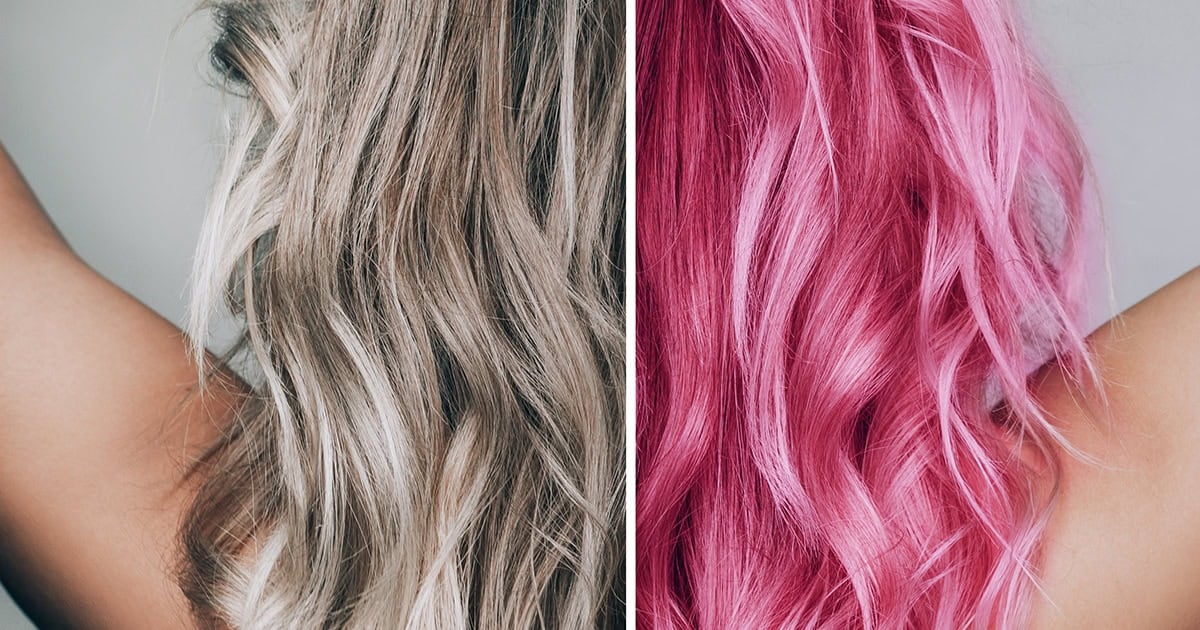
As Joli points out, “most temporary colors are colors that just lay on the surface of the hair. They’re not like your semi, demi, or permanent colors that go up underneath the cuticle of the hair. So a lot of temporary colors will not stain.”
But it pays to be cautious – any time you use a temporary color, always do a test strip (especially on white hair) so you don’t end up permanently staining your hair.
The safest temporary color (in our opinion) is Manic Panic.
If you try a temporary color and end up staining your naturally silver hair, the QuickSilverHair Clay kit is capable of removing some of those temporary colors.
Our Product Recommendations
I’ve linked to many of our recommended products throughout this post, but you can also find a comprehensive list in my Amazon shop:
Final Thoughts: You Are Not Alone
The transition to gray hair is deeply personal, and when you add waves and curls into the mix, it can feel even more overwhelming. But you don’t have to figure it all out by yourself.
Want to hear the full conversation? Watch Episode 1 of The Silver Thread HERE.
This post — and our podcast — is here to support you every step of the way. Whether you’re dealing with dryness, confused by your curl pattern, or simply want to fall in love with your silver hair again, we’ve got your back.
And let us know in the comments: What’s been your biggest challenge with your curly gray hair?
Don’t forget to subscribe to The Silver Thread so you never miss an episode!!
Please do me a favor and share this post to social media, as it helps me grow my audience and spread the word about our Silver Revolution! And remember to subscribe to my YouTube Channel and Pinterest Feed for more gray hair tips and product recommendations. Thanks!


My biggest challenge is having gray, coily/curly hair on the underside and straight/wavy hair that is my natural brown color on top. It’s a disaster!
Such an empowering and informative guide — I love how you break down curly gray hair care with compassion, clarity, and real-life solutions!
Thank you!